What are Fuzz and Octave Effect Pedals for Guitar
Entertainment,Music,Consumer
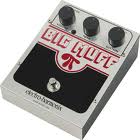
Fuzz and octave guitar effects pedals are a unique way in which several well known musicians have achieved sound from different stages in musical history. In an effort to come up with a totally unique sound, technology has put together devices that are clear and distinct. When these units are applied to modern day music it gives an interesting sound spin that is ruminant to the mid to late seventies.
Modern technology has made the use of a revered piece of equipment such as this clear and distinct. Sounds of today are easily mixed with the unique feel of the sixties and the seventies.
The audio source is always affected by the effects pedals. This electric source is directly responsible for the sounds of the electric instrument. It can be used with the electric keyboard, the electric guitar, and and keyboards. Each one of these instruments is enhanced to great heights.
The sound that this unit can produce may not be for every one very few things are. It is usually more appreciated by the musically advanced. There is a greater quality of sound from an octave up than you may find coming from any other pedal. Guitar players from around the globe of all levels have learned to respect the advancement this technology has offered the industry.
The fuzz directly affects the transition. A poor quality product can easily distort sounds. It can be used during live concerts or in a recording studio. When it is used in a live concert it should be plugged into the path of the electric signal. During a post production situation the auxiliary output is patched into the effects petal. The effect is responsible for dramatic sounds as well as subtle musical listening.
Subtle music as well as dramatic musical listening can be contributed to the device.This device gives a seasoned musician the ability to take their sound to a whole new and unexplored level. Many of them have a remarkable amount of respect for the reigns of dramatic sounds caused by a unit that will also relax and distress a listener with clear subtle sounds. Ultimately there is no substitute for good quality.
Locate that octave pedal to help make your music sound better. Or choose one of many fuzz pedal choices you have online. Go online today and find more.
Related Articles - consumer electronics, fuzz pedals, octave pedals, guitar effects pedals for guitar
Showing posts with label amplifiers. Show all posts
Showing posts with label amplifiers. Show all posts
Monday, 5 July 2010

Friday, 6 November 2009
All Amped About Guitar Amps: Which One Goes Where?
An important part of creating your own home recording studio requires understanding how the amp works, but more importantly, what job each type of amp has. This is, however, a simple concept to understand. For example, electric guitars require the use of an electric guitar amp whereas electric bass guitars require the bass amp. Acoustic-electric guitars use acoustic amplifiers, and, of course, acoustic guitars do not use amps. This basic information, however, is not all that is needed for a successful amp set up. Let's take a closer look.
Amps are a very tricky subject as there are just so many out there. The basic idea of them is to take the ultra low voltage coming from the pickups and bring them up to line level. Seems simple, but there is a lot that goes into how that signal is boosted.
The main two types of amps are tube and solid state. Tube amplifiers are the grand daddies of amplifiers and use vacuum tubes as their main amplifier. Solid state amplifiers use modern chips in place of the tubes. The difference is that tubes tend to add a warmth and smoothness to the sound but can also add a good amount of noise too. Solid state amps are more clean and solid, but can sound cold. All amps, whether for guitar, bass, or acoustic work the same but differ in where they focus their characteristics. This is not to say that you should plug a guitar into a bass amp. Sometime it will work, and sometimes it just won't.
The Relationship between Electric Guitars and Electric Guitar Amps
Electric guitars work on pickups. A pickup works by using a magnet that is wrapped in wire. The magnetic field rides just through the strings so when the string is strummed or plucked, it alters the magnetic field and produces an electrical signal at the same frequency as the note being played. The "tone" of the pickup is determined by how many times the wire is wound around the magnet. A standard electric pickup is wrapped around 5000 times, which is nothing to sneeze at.
A Humbucker pickup uses 2 of these wrappings to reduce the amount of noise that can be produced by the pickup. This, obviously, increases the quality of any guitar using Humbucker pickups.
Bass Electric Guitars and Their Amps
Bass guitars work pretty much the same way that an electric guitar does. The reason for a bass sounding so deep is the fact that they use thicker strings, which vibrate at a lower frequency by nature. Specifically, a bass amp is specially designed to focus on the lower frequency spectrum and boost it. A normal guitar amp focuses more on the mid to high frequency spectrum.
Furthermore, a guitar wire is wound around 5000 times using #42 wire. The more times it is wound, or the more tightly wound it is, the more the lower frequencies get tapered off. To exaggerate this effect, a bass uses thicker wire as well. Sometimes the pickup is split so that it looks like a z on the body. This way the two higher strings have a boosted sound and the lower ones produce a thicker sound because of the unique shape.
Acoustic-Electric Guitars and Acoustic Guitar Amps
Acoustic-Electric guitars and their amps work entirely different from electric guitars and amps as they use what is called a "piezo pickup."
A piezo pickup is essentially a dynamic microphone that only reacts when the string is plucked. This creates a more natural sound in relation to the actual acoustic sound. Today, even some electric guitars have piezo pickups added to them because they are so unique.
Now that you have the know how, you should also know that some amps are inter-compatible between guitars. What you can't know, however, is how well one guitar type, like a Fender, will be compatible with a different brand, like Line6, as I mentioned above. As Soundetta.com has suggested many times, ample amount of research can benefit you in decision making but I still insist that there is nothing better than pulling up a seat in your local guitar store with your girl in one hand and line into one amp at a time. Rock on.
For more information about guitar amplifiers and guitars, visit my blog Soundetta.com: Your Music Arena!, which is all about music!
Amps are a very tricky subject as there are just so many out there. The basic idea of them is to take the ultra low voltage coming from the pickups and bring them up to line level. Seems simple, but there is a lot that goes into how that signal is boosted.
The main two types of amps are tube and solid state. Tube amplifiers are the grand daddies of amplifiers and use vacuum tubes as their main amplifier. Solid state amplifiers use modern chips in place of the tubes. The difference is that tubes tend to add a warmth and smoothness to the sound but can also add a good amount of noise too. Solid state amps are more clean and solid, but can sound cold. All amps, whether for guitar, bass, or acoustic work the same but differ in where they focus their characteristics. This is not to say that you should plug a guitar into a bass amp. Sometime it will work, and sometimes it just won't.
The Relationship between Electric Guitars and Electric Guitar Amps
Electric guitars work on pickups. A pickup works by using a magnet that is wrapped in wire. The magnetic field rides just through the strings so when the string is strummed or plucked, it alters the magnetic field and produces an electrical signal at the same frequency as the note being played. The "tone" of the pickup is determined by how many times the wire is wound around the magnet. A standard electric pickup is wrapped around 5000 times, which is nothing to sneeze at.
A Humbucker pickup uses 2 of these wrappings to reduce the amount of noise that can be produced by the pickup. This, obviously, increases the quality of any guitar using Humbucker pickups.
Bass Electric Guitars and Their Amps
Bass guitars work pretty much the same way that an electric guitar does. The reason for a bass sounding so deep is the fact that they use thicker strings, which vibrate at a lower frequency by nature. Specifically, a bass amp is specially designed to focus on the lower frequency spectrum and boost it. A normal guitar amp focuses more on the mid to high frequency spectrum.
Furthermore, a guitar wire is wound around 5000 times using #42 wire. The more times it is wound, or the more tightly wound it is, the more the lower frequencies get tapered off. To exaggerate this effect, a bass uses thicker wire as well. Sometimes the pickup is split so that it looks like a z on the body. This way the two higher strings have a boosted sound and the lower ones produce a thicker sound because of the unique shape.
Acoustic-Electric Guitars and Acoustic Guitar Amps
Acoustic-Electric guitars and their amps work entirely different from electric guitars and amps as they use what is called a "piezo pickup."
A piezo pickup is essentially a dynamic microphone that only reacts when the string is plucked. This creates a more natural sound in relation to the actual acoustic sound. Today, even some electric guitars have piezo pickups added to them because they are so unique.
Now that you have the know how, you should also know that some amps are inter-compatible between guitars. What you can't know, however, is how well one guitar type, like a Fender, will be compatible with a different brand, like Line6, as I mentioned above. As Soundetta.com has suggested many times, ample amount of research can benefit you in decision making but I still insist that there is nothing better than pulling up a seat in your local guitar store with your girl in one hand and line into one amp at a time. Rock on.
For more information about guitar amplifiers and guitars, visit my blog Soundetta.com: Your Music Arena!, which is all about music!
Friday, 23 October 2009
Make your own Tube amp, book review
This article is a book review on a series of six books that is the most comprehensive and lucid explanation of guitar tube amp architecture, circuits, tone, components and construction technique for DIYers I have ever found. The review deals with each book separately and recommends purchasing them in a specific order to grow your knowledge in step with your building experience.
Kevin O'Connor of London Power has created a series of books under the main title of "The Ultimate Tone." These books are truly unique and carefully tailored for the Do-It-Yourself (DIY) guitar tube amp hobbyist and boutique amplifier builder. The books have a home-made 'feel' as well... all the illustrations are done by hand and the books are photocopy-printed on 8.5″x11″ paper and bound with plastic spines and clear plastic covers. There are six books in the series now with the most recent being released in the late spring of 2008. You may want to buy the entire series all at once and get a modest savings, but I think you should consider buying them one at a time and digest as you go, building projects along the way. A key point though... you don't necessarily want to buy them in numerical order. I recommend the following sequence:
The Ultimate Tone Volume 3 - Generations of Tone
The Ultimate Tone Volume 5 - Tone Capture
The Ultimate Tone Volume 2 - Systems Approach to Stage Sound Nirvana
The Ultimate Tone Volume 4 - Advanced Techniques for Modern Guitar Amp Design
The Ultimate Tone - Modifying and Custom Building Tube Guitar Amps
The Ultimate Tone Volume 6 - Timeless Tone Built for the Future Today
The Ultimate Tone Volume 3 - Generations of Tone
This is the most important book in the series for the beginning tube amp builder.
Chapters 2 through 4 lay down the foundation of good DIY tube amp construction, filling you in on good electrical connections, grounding technique, lead dress and other wiring techniques, and mechanical layout including assembly methods like terminal strips, turret and eyelet boards.
The subsequent chapters each pick a particular 'iconic' amplifier, each iconic amplifier being a prototypical example of amplifiers of its class, and they are examined in detail as to the circuit topology, peculiar tonal characteristics that result and fatal flaws that the product is notorious for. Kevin provides the original schematics and then shows how you can apply the techniques detailed in the earlier chapters to improve the performance and reliability of the icon without harming the tone. The schematics are redrawn, layouts are provided and mechanical solutions are worked out to make each chapter a complete, self-contained, build-it-yourself amp project.
This process is repeated for several variations of the Champ in chapter 5 (this chapter greatly influenced my own single-ended amp project), then in quick succession: the Bassman, Plexi, 800, Bull Dog, AC-30, Portaflex, SVT, Bass Master, Custom Special, Guitar Mate, Herzog and Laney amplifiers are dealt with.
If you can only buy one book for your DIY guitar amp hobby I'd heartily recommend this one.
The Ultimate Tone Volume 5 - Tone Capture
Volume 5 picks up where Volume 3 left off, with a project-oriented approach and some sophisticated DIY tube amp solutions for guitar and bass.
The book starts off with a chapter overviewing vacuum tube operation called 'tube tone,' followed up by a chapter on guitar electronics and pickup characteristics.
The next two chapters are small projects: Sigma for effects switching and Triple-X for amplifier switching.
Chapters 5 & 6 are on transformers... important components but it made me yawn, sorry.
Starting with chapter 7, all the stops are pulled out and you are in project heaven... Major (200W), Soma 84 (EL84 amp), Standard (the London Power Standard Preamp from 1995 coupled to a 50W amp using four power tubes), Doppelsonde (mixing power tube types), AX84 (discussion on the original goal of a very low output power amp), Kelly (50W from 4 6V6s), and several other projects of lesser scope.
One favorite project I did was based on Kevin's reworking of the HotBox tube preamp pedal from Matchless in chapter 16. I built this pedal in a truly "true point-to-point style" (meaning terminal strips) in a tube pedal enclosure from Doug Hoffman, substituting a Baxandall tone stack and reworking the preamp values to be more Dumble-esqe (non-HRM type).
What would you do to match an amplifier to Yngwie Malmsteen's style? See chapter 18, 'Swede.'
The Ultimate Tone Volume 2 - Systems Approach to Stage Sound Nirvana
Volume 2 is not project oriented. The bulk of the book, chapters 2 through 5, deals with power supply tricks and a comprehensive overview of power amplifiers, including tube, solid-state and hybrid power amps. Chapter 3, on tube power amplifiers, has some very practical information on mods and fixes to Marshall and Fender bias circuits.
I like the 1st and last chapters of Volume 2 the best. The first chapter is a short discussion of sound stages and how you might setup your gear on stage for the best audience/band experience. The last, chapter 6, is called "Pillars of Tone" and in this chapter the major contributors tone at the block-level of a guitar tube amplifier system design are discussed one by one and Kevin provides some very valuable insight into tone shaping throughout the preamp/amplifier.
The Ultimate Tone Volume 4 - Advanced Techniques for Modern Guitar Amp Design
This is the book you'll want to buy if you feel the need to get deeply involved with the power scaling technology that Kevin has developed. Power Scaling, coined and trademarked by Kevin, is the way you can get aspects of power amp distortion (as opposed to preamp distortion) into your tone at bedroom volume levels. Volume 4 is not DIY project oriented but explores the issues, including attenuation, power scaling (both down and up), sag, and power management, tackled by modern guitar tube amp designers.
That said, the second-to-last chapter in Volume 4 might be important for a broader group of enthusiast builders... design philosophy. In this chapter Kevin provides a hierarchical design process that could be used to make key decisions on how you approach your next project.
The Ultimate Tone - Modifying and Custom Building Tube Guitar Amps
There is no volume number in the title of this book, it was the 1st. Personally, I bought it for completeness. I specifically wanted to have the 'perfect effects loop' information, although the loop itself is incorporated into a project in Volume 5. TUT also has some excellent material on reverbs and signal switching methods that is not explained in the other volumes. The first half of TUT introduces/overviews tube amp systems, power supplies & grounds then focuses on preamp and power amp modifications to commercial amplifiers (e.g. Marshall / Fender)... if you are totally new to tube electronics you may want to buy this 1st volume at the same time as Volume 3.
The Ultimate Tone Volume 6 - Timeless Tone Built for the Future Today
In many ways, Volume 6 is a continuation and extension of the material in Volume 4, where Power Scaling is introduced. In Volume 6 a new 'direct control' version of Powerscaling is featured which was introduced in Vol 4 but flushed out with comprehensive circuits and applied to 'sag' and sustain control as well in Vol 6. The new scaling circuits have many advantages for a DIY builder like greater noise immunity and less sensitivity to layout, etc.
I applied the new DC Power Scaling to a Trainwreck clone project and was really impressed with the improvement in 'playability' at lower volumes... the unmodified Trainwreck Express circuit is just too loud for domestic use, needing to be cranked to get the sweet tones it is renowned for.
One of the chapters in Volume 6 is dedicated to the Dumble amplifiers... something I was really looking forward to since many of my hobby projects focus on those circuits. I found this short chapter to be a good introduction to the overall architecture of the Dumble amps, written from the point of view of the evolution from the early modified standard amps that Alexander Dumble started out doing, but I felt the chapter fell short in discussing some of the more important subtleties of the later Dumble models.
Volume 6 also has lots of other material in it, including a great tutorial on designing really high output power amplifiers and a great chapter on high gain amplifier designs with real-world circuits referenced and detailed.
In Summary...
Kevin's books have a very empirical approach. He encourages you to set aside convention in some instances or not be afraid to try combinations of tubes or even pulling tubes and in all cases clearly explains why it is o.k. and points out any reasons why it wouldn't be o.k. All the examples in the books are very practical and he certainly has the DIYer in mind as he is writing.
Kevin's body of work is truly encyclopedic in nature, and considering that, one feature sorely lacking from his books is any kind of indexing... this is aggravated by the fact that Kevin constantly refers to previous writings rather than repeat himself in a new volume, and it is very difficult to put your finger on the reference even with the other book in hand. Perhaps search engine technology, like Google's ability to search protected content, could be put to good use in this case and provide a kind of 'auto-index' on the web of all of Kevin's books without actually giving away the book itself. Or better yet, how about an e-book format of Kevin's entire collection of TUT books... I think all of the e-book readers include searching capabilities... and Kevin's hand-drawn schematics would probably scale adequately and be very readable on the e-paper displays these devices feature.
Article Source: http://EzineArticles.com/?expert=Mark_Douglas_Roberts
Kevin O'Connor of London Power has created a series of books under the main title of "The Ultimate Tone." These books are truly unique and carefully tailored for the Do-It-Yourself (DIY) guitar tube amp hobbyist and boutique amplifier builder. The books have a home-made 'feel' as well... all the illustrations are done by hand and the books are photocopy-printed on 8.5″x11″ paper and bound with plastic spines and clear plastic covers. There are six books in the series now with the most recent being released in the late spring of 2008. You may want to buy the entire series all at once and get a modest savings, but I think you should consider buying them one at a time and digest as you go, building projects along the way. A key point though... you don't necessarily want to buy them in numerical order. I recommend the following sequence:
The Ultimate Tone Volume 3 - Generations of Tone
The Ultimate Tone Volume 5 - Tone Capture
The Ultimate Tone Volume 2 - Systems Approach to Stage Sound Nirvana
The Ultimate Tone Volume 4 - Advanced Techniques for Modern Guitar Amp Design
The Ultimate Tone - Modifying and Custom Building Tube Guitar Amps
The Ultimate Tone Volume 6 - Timeless Tone Built for the Future Today
The Ultimate Tone Volume 3 - Generations of Tone
This is the most important book in the series for the beginning tube amp builder.
Chapters 2 through 4 lay down the foundation of good DIY tube amp construction, filling you in on good electrical connections, grounding technique, lead dress and other wiring techniques, and mechanical layout including assembly methods like terminal strips, turret and eyelet boards.
The subsequent chapters each pick a particular 'iconic' amplifier, each iconic amplifier being a prototypical example of amplifiers of its class, and they are examined in detail as to the circuit topology, peculiar tonal characteristics that result and fatal flaws that the product is notorious for. Kevin provides the original schematics and then shows how you can apply the techniques detailed in the earlier chapters to improve the performance and reliability of the icon without harming the tone. The schematics are redrawn, layouts are provided and mechanical solutions are worked out to make each chapter a complete, self-contained, build-it-yourself amp project.
This process is repeated for several variations of the Champ in chapter 5 (this chapter greatly influenced my own single-ended amp project), then in quick succession: the Bassman, Plexi, 800, Bull Dog, AC-30, Portaflex, SVT, Bass Master, Custom Special, Guitar Mate, Herzog and Laney amplifiers are dealt with.
If you can only buy one book for your DIY guitar amp hobby I'd heartily recommend this one.
The Ultimate Tone Volume 5 - Tone Capture
Volume 5 picks up where Volume 3 left off, with a project-oriented approach and some sophisticated DIY tube amp solutions for guitar and bass.
The book starts off with a chapter overviewing vacuum tube operation called 'tube tone,' followed up by a chapter on guitar electronics and pickup characteristics.
The next two chapters are small projects: Sigma for effects switching and Triple-X for amplifier switching.
Chapters 5 & 6 are on transformers... important components but it made me yawn, sorry.
Starting with chapter 7, all the stops are pulled out and you are in project heaven... Major (200W), Soma 84 (EL84 amp), Standard (the London Power Standard Preamp from 1995 coupled to a 50W amp using four power tubes), Doppelsonde (mixing power tube types), AX84 (discussion on the original goal of a very low output power amp), Kelly (50W from 4 6V6s), and several other projects of lesser scope.
One favorite project I did was based on Kevin's reworking of the HotBox tube preamp pedal from Matchless in chapter 16. I built this pedal in a truly "true point-to-point style" (meaning terminal strips) in a tube pedal enclosure from Doug Hoffman, substituting a Baxandall tone stack and reworking the preamp values to be more Dumble-esqe (non-HRM type).
What would you do to match an amplifier to Yngwie Malmsteen's style? See chapter 18, 'Swede.'
The Ultimate Tone Volume 2 - Systems Approach to Stage Sound Nirvana
Volume 2 is not project oriented. The bulk of the book, chapters 2 through 5, deals with power supply tricks and a comprehensive overview of power amplifiers, including tube, solid-state and hybrid power amps. Chapter 3, on tube power amplifiers, has some very practical information on mods and fixes to Marshall and Fender bias circuits.
I like the 1st and last chapters of Volume 2 the best. The first chapter is a short discussion of sound stages and how you might setup your gear on stage for the best audience/band experience. The last, chapter 6, is called "Pillars of Tone" and in this chapter the major contributors tone at the block-level of a guitar tube amplifier system design are discussed one by one and Kevin provides some very valuable insight into tone shaping throughout the preamp/amplifier.
The Ultimate Tone Volume 4 - Advanced Techniques for Modern Guitar Amp Design
This is the book you'll want to buy if you feel the need to get deeply involved with the power scaling technology that Kevin has developed. Power Scaling, coined and trademarked by Kevin, is the way you can get aspects of power amp distortion (as opposed to preamp distortion) into your tone at bedroom volume levels. Volume 4 is not DIY project oriented but explores the issues, including attenuation, power scaling (both down and up), sag, and power management, tackled by modern guitar tube amp designers.
That said, the second-to-last chapter in Volume 4 might be important for a broader group of enthusiast builders... design philosophy. In this chapter Kevin provides a hierarchical design process that could be used to make key decisions on how you approach your next project.
The Ultimate Tone - Modifying and Custom Building Tube Guitar Amps
There is no volume number in the title of this book, it was the 1st. Personally, I bought it for completeness. I specifically wanted to have the 'perfect effects loop' information, although the loop itself is incorporated into a project in Volume 5. TUT also has some excellent material on reverbs and signal switching methods that is not explained in the other volumes. The first half of TUT introduces/overviews tube amp systems, power supplies & grounds then focuses on preamp and power amp modifications to commercial amplifiers (e.g. Marshall / Fender)... if you are totally new to tube electronics you may want to buy this 1st volume at the same time as Volume 3.
The Ultimate Tone Volume 6 - Timeless Tone Built for the Future Today
In many ways, Volume 6 is a continuation and extension of the material in Volume 4, where Power Scaling is introduced. In Volume 6 a new 'direct control' version of Powerscaling is featured which was introduced in Vol 4 but flushed out with comprehensive circuits and applied to 'sag' and sustain control as well in Vol 6. The new scaling circuits have many advantages for a DIY builder like greater noise immunity and less sensitivity to layout, etc.
I applied the new DC Power Scaling to a Trainwreck clone project and was really impressed with the improvement in 'playability' at lower volumes... the unmodified Trainwreck Express circuit is just too loud for domestic use, needing to be cranked to get the sweet tones it is renowned for.
One of the chapters in Volume 6 is dedicated to the Dumble amplifiers... something I was really looking forward to since many of my hobby projects focus on those circuits. I found this short chapter to be a good introduction to the overall architecture of the Dumble amps, written from the point of view of the evolution from the early modified standard amps that Alexander Dumble started out doing, but I felt the chapter fell short in discussing some of the more important subtleties of the later Dumble models.
Volume 6 also has lots of other material in it, including a great tutorial on designing really high output power amplifiers and a great chapter on high gain amplifier designs with real-world circuits referenced and detailed.
In Summary...
Kevin's books have a very empirical approach. He encourages you to set aside convention in some instances or not be afraid to try combinations of tubes or even pulling tubes and in all cases clearly explains why it is o.k. and points out any reasons why it wouldn't be o.k. All the examples in the books are very practical and he certainly has the DIYer in mind as he is writing.
Kevin's body of work is truly encyclopedic in nature, and considering that, one feature sorely lacking from his books is any kind of indexing... this is aggravated by the fact that Kevin constantly refers to previous writings rather than repeat himself in a new volume, and it is very difficult to put your finger on the reference even with the other book in hand. Perhaps search engine technology, like Google's ability to search protected content, could be put to good use in this case and provide a kind of 'auto-index' on the web of all of Kevin's books without actually giving away the book itself. Or better yet, how about an e-book format of Kevin's entire collection of TUT books... I think all of the e-book readers include searching capabilities... and Kevin's hand-drawn schematics would probably scale adequately and be very readable on the e-paper displays these devices feature.
Meanwhile, how do you get Kevin's books today? The best way to get the books is to directly order them from London Power Press. They now have a shopping cart on http://www.londonpower.com.
Article Source: http://EzineArticles.com/?expert=Mark_Douglas_Roberts
Tuesday, 20 October 2009
I know it's only Rock and Roll, but I like it!


If you are like me the phrase “too many guitars” is not a concept I can understand. I mean the ladies like shoes and hand bags….and most have a similar feeling regarding the numbers involved. So why are we poor put apon men so hassled about our guitar gear?
I have a modest collection with a standard Fender Telecaster, a Keith Richards type Fender Telecaster with a Seymour Duncan Jazz humbucker on the neck and a Texas Special on the bridge, three Fender Stratocasters, a deluxe, a red USA Standard with Texas Specials and a Frankenstrat with a Warmoth swamp ash body and Hot Alnico Fender pickups and a Wilkinsons bridge….after that a Epiphone 335 with Seymour Duncan humbuckers last but not least a Tokai Les Paul (Japan) and again with a set of Seymours! Nearly forgot the Ovation acoustic!
To compliment a Marshall TSL602, Fender Hot Rod Deluxe, Blind Dog, and a Laney LC15 tube amps. With effects from Boss, Nady, Electro Harmonix, pedals modified with Monte Allums kits, a TC distortion, a VOX Big Ben, a modified RAT, Dunlop Wah, etc.….. plus two boards, one with two channels switching.
No that’s modest when a friend has 17, OK a lot are FrankenStrats and Teles…but still reasonable. What would I buy if I could, maybe a Suhr or an Anderson. Possible ENGL or a 57 reissue Fender twin..or even a Cornforth. Part of the fun would be looking and trying and deciding.
The biggest regret was selling my Fender 59 Bassman, without dought the best clean sound I’ve ever heard. The trouble was the clean was so good when played through pedals…good but suffered compared to the clean sound.
I’m currently trying to get back in to a band…..just got to join one who’s standards are low enough. I enjoy playing…..isn’t that why we do it.
We are not expecting to be playing at Glastonbury next year….a pub would be just fine!
Source GMP
Guitars, amps and effects
Yowza! Did you hear that hideous noise? It sounded like a combination of nails on a chalkboard, a cat in a dryer, and a baby wailing at the top of his lungs. Do you have any idea of what made that awful sound? As a long-time musician, I think I may have the answer for you. It's a guitarist fiddling for the first time with his new amp.
Before I bought my first amp, I wouldn't have thought that a human could produce such a horribly wretched sound. But, now I know better. In the process of finding the perfect settings for your guitar and amp, you are sure to discover all kinds of disagreeable screeches and squeals, shrieks and screams. And, believe it or not, these unpleasant and often other-worldly sounds are all part of the learning experience.
I've often been asked to give beginners online advice on how to dial in their amps and guitar settings. For a number of reasons, this is no easy task. As you know, the experience of sound is totally subjective. What I may like, you may not. This said, it's hard to give definitive advice about guitar and amp settings.
So much is involved in getting the sound just right for your tastes-including the room you're playing in, the gauge of your strings, the guitar you're jamming on, and the type of amp itself. All of these come together to create a playground for experimentation: a place where you can twist this knob here and turn that knob there and, before you know it, you're a musical stylist, an expert in designing the perfect sound.
I can, however, offer a few general tips that might help out as you begin playing with your amp.
Always start with your dials pointing to 12 o'clock and twist and turn from there. 12 o'clock will give you the baseline to work from and you can let your ears tell you what does and doesn't work from there.
No matter how many other bells and whistles your amp has, you're almost always looking at a four basic areas you'll be most interested in learning how to manipulate:
Treble Adjusting this setting will affect the amount of high end in your sound. If you go big with treble, you'll end up with a very sharp and crisp sound. However, if you go too big, you'll likely end up with a harsh sound.
Middle The mids can be the most important setting to your overall sound. Adjusting these settings can really impact the overall character of your sound. Low settings can give you the classic rock-n-roll sound, while higher mids will take you down the honky-tonk, bluesy path. Play around with the mids to really see how much change you can create in your sound with the simple twist of a knob!
Bass If you like that deep, booming sound, you'll definitely want to go fat on your bass. On smaller amps, however, you might not be able to get the full effect of the bass simply because of their size. But, no matter how you like it, be sure to see how the bass and treble can work with one another to create your ideal sound.
EQ / Filter / Tone/ Contour They're called by different names on various amps, but they all do the basically the same thing: adjust all of your basic settings (e.g., treble, mids, and bass) with one knob. If you want to find out what the maker of your amp considers "correct" settings, play with these knobs to hear how your treble, mids, and bass all can work together for radically differing results.
If you've got a valve (tube) amp, be sure to:
always replace the whole set when even just one tube blows
never move your amp while it's still hot
be extra careful that you line up he pins in each tube perfectly with their corresponding holes on the amp
To make sure you keep your amp in top condition, be sure to:
keep your amp in a dry location
always use the best quality leads (guitar, speaker, microphone, and effects)
always have your amp serviced by a capable technician
In the end, you have to know this one rule of amps: there is no right or wrong way to set it up. If you like what you hear, you've done a great job. If you don't like what you hear, remember the settings and the sound and don't dial those in again. Experiment, experiment, experiment and have fun!
Jon Butt is the publisher of Musical Instruments Guide , a free resource dedicated to all things musical. From electric guitars to drum sets, tubas to bagpipes, and every musical accessory in-between, the http://www.the-musical-instruments-guide.com/guitars.html">Musical Instruments Guide is packed full of informative articles, find top-rated musical instruments and online merchants
Article Source: http://EzineArticles.com/?expert=Jon_Butt
Before I bought my first amp, I wouldn't have thought that a human could produce such a horribly wretched sound. But, now I know better. In the process of finding the perfect settings for your guitar and amp, you are sure to discover all kinds of disagreeable screeches and squeals, shrieks and screams. And, believe it or not, these unpleasant and often other-worldly sounds are all part of the learning experience.
I've often been asked to give beginners online advice on how to dial in their amps and guitar settings. For a number of reasons, this is no easy task. As you know, the experience of sound is totally subjective. What I may like, you may not. This said, it's hard to give definitive advice about guitar and amp settings.
So much is involved in getting the sound just right for your tastes-including the room you're playing in, the gauge of your strings, the guitar you're jamming on, and the type of amp itself. All of these come together to create a playground for experimentation: a place where you can twist this knob here and turn that knob there and, before you know it, you're a musical stylist, an expert in designing the perfect sound.
I can, however, offer a few general tips that might help out as you begin playing with your amp.
Always start with your dials pointing to 12 o'clock and twist and turn from there. 12 o'clock will give you the baseline to work from and you can let your ears tell you what does and doesn't work from there.
No matter how many other bells and whistles your amp has, you're almost always looking at a four basic areas you'll be most interested in learning how to manipulate:
Treble Adjusting this setting will affect the amount of high end in your sound. If you go big with treble, you'll end up with a very sharp and crisp sound. However, if you go too big, you'll likely end up with a harsh sound.
Middle The mids can be the most important setting to your overall sound. Adjusting these settings can really impact the overall character of your sound. Low settings can give you the classic rock-n-roll sound, while higher mids will take you down the honky-tonk, bluesy path. Play around with the mids to really see how much change you can create in your sound with the simple twist of a knob!
Bass If you like that deep, booming sound, you'll definitely want to go fat on your bass. On smaller amps, however, you might not be able to get the full effect of the bass simply because of their size. But, no matter how you like it, be sure to see how the bass and treble can work with one another to create your ideal sound.
EQ / Filter / Tone/ Contour They're called by different names on various amps, but they all do the basically the same thing: adjust all of your basic settings (e.g., treble, mids, and bass) with one knob. If you want to find out what the maker of your amp considers "correct" settings, play with these knobs to hear how your treble, mids, and bass all can work together for radically differing results.
If you've got a valve (tube) amp, be sure to:
always replace the whole set when even just one tube blows
never move your amp while it's still hot
be extra careful that you line up he pins in each tube perfectly with their corresponding holes on the amp
To make sure you keep your amp in top condition, be sure to:
keep your amp in a dry location
always use the best quality leads (guitar, speaker, microphone, and effects)
always have your amp serviced by a capable technician
In the end, you have to know this one rule of amps: there is no right or wrong way to set it up. If you like what you hear, you've done a great job. If you don't like what you hear, remember the settings and the sound and don't dial those in again. Experiment, experiment, experiment and have fun!
Jon Butt is the publisher of Musical Instruments Guide , a free resource dedicated to all things musical. From electric guitars to drum sets, tubas to bagpipes, and every musical accessory in-between, the http://www.the-musical-instruments-guide.com/guitars.html">Musical Instruments Guide is packed full of informative articles, find top-rated musical instruments and online merchants
Article Source: http://EzineArticles.com/?expert=Jon_Butt
Subscribe to:
Posts (Atom)